

Published on August 27, 2025
12 min to read
Gamify Your Employee Advocacy: Using Leaderboards and Incentives

Summarize with AI


Table of contents
Summarize with AI

ChatGPT

Claude

Perplexity
Share

Vista Social

X (Twitter)


If your advocacy efforts are “meh” instead of magnetic, then it’s time to gamify your employee advocacy.
Keeping employees engaged enough to share company content can feel like pulling teeth. You post updates, send reminders, and… crickets.
That’s where gamification swoops in to save the day.
By adding leaderboards, rewards, and a little friendly competition, you can transform advocacy from “just another task” into something your team wants to do (and benefit from).
Imagine employees racing to climb the leaderboard, sharing content faster than you can schedule it, and actually having fun while boosting your brand’s reach.
Ready to make your employee advocacy program exciting? Let’s dive right in.
Table of contents
What does it mean to gamify your employee advocacy?
Gamifying your employee advocacy means turning your advocacy program into a fun, engaging experience by adding game-like elements, such as leaderboards, points, badges, and rewards.
Instead of simply asking employees to share your brand’s content, you make the process exciting.
Every post, share, or mention earns them points.
Top performers get featured on your advocacy leaderboards, unlocking bragging rights or even tangible perks such as gift cards or extra days off.
Gamifying advocacy programs is about sparking healthy competition and motivation, encouraging your employees to participate—not because they have to, but because it’s fun, rewarding, and a little addictive.
The result?
More shares, higher engagement, and a team that actually enjoys being your brand’s biggest cheerleaders.
What are the benefits when you gamify your employee advocacy?
Gamifying your employee advocacy program offers several benefits.
Skyrockets employee engagement
Asking your employees to share branded content without giving them a clear reason feels… flat.
However, when you turn it into a game, suddenly there’s excitement and enthusiasm to participate.
Your employees can get points for every post they share, badges for consistency, and maybe even weekly recognition on a leaderboard.
That little dose of friendly employee advocacy competition flips the script since it’s no longer “just another task,” but a chance to win, shine, and even brag a little.
Remember, an engaged team is the fuel for any successful employee advocacy program.
Increases content reach
Your brand’s company content on social media can only go so far.
However, when dozens (or even hundreds) of employees amplify your brand content through their personal networks, you unlock exponential reach.
Now, throw gamification into the mix.
Employees won’t just share your posts once. They’ll keep at it because they’re climbing that leaderboard or chasing that monthly incentive.
Every share is a win for both your brand and them.
With amplified sharing via your employee advocates, you can gain more visibility for your content, increase engagement, and amplify your brand’s social media presence.
After all, messages coming from real people feel far more authentic than branded posts, so you’re not just amplifying your reach, but genuinely engaging with your audience.
Builds a sense of community
Gamifying your employee advocacy program helps create shared goals that cut across your company’s departments.
Suddenly, your marketing intern is cheering on the sales manager because they’re both battling it out for a leaderboard spot.
It’s fun, lighthearted, and gives everyone something to rally around.
That sense of community doesn’t just boost morale, but also makes your employee advocacy program more effective.
Your employees can stay motivated because it feels less like “work” and more like being part of a collective win.
Rewards top performers
People love being recognized.
It’s human nature.
Gamification bakes recognition into your employee advocacy program.
For example, you can provide the top three sharers of the month with a gift card, company swag, or an additional shoutout in your weekly team meeting.
That recognition can make your employees feel seen and valued.
And when others notice their peers being rewarded, guess what?
They’ll likely want in, too, creating a cycle where recognition fuels participation, and participation fuels recognition.
Delivers measurable results
With gamification, you’re not only boosting your employee advocacy efforts but also tracking performance in real time.
You can see who’s participating the most, which types of content employees love to share, and how much traffic or engagement those shares bring back to your brand.
Instead of guessing whether your advocacy program is working, you’ll have hard numbers to prove it.
And that’s gold when you’re reporting to leadership or justifying the budget for incentives.
How to use leaderboards and incentives to gamify your employee advocacy
Turning your employee advocacy program into a fun, engaging game isn’t just about points and prizes but about sparking excitement and fueling participation.
Check out the steps and tips below to help you make leaderboards and incentives work for your employee advocacy program.
Set clear goals before launching
Before gamifying your employee advocacy program, decide what success looks like.
Without clear goals in your employee advocacy plan, your leaderboard may reward the wrong behaviors.
For example:
| Goal | Incentive/reward |
| Brand awareness | Give more points for sharing posts on LinkedIn and X/Twitter |
| Engagement | Reward employees who write captions that generate comments and likes |
| Traffic | Prioritize points for posts that drive clicks to your website |
Imagine your company is launching a new product.
Instead of rewarding employees just for posting, you could assign higher points to posts that generate sign-ups or demo requests.
Doing so ensures your gamification strategy actually drives business outcomes.
Use leaderboards to fuel friendly competition
Leaderboards can bring visibility and a bit of healthy competition to your advocacy program.
Your employees get to see where they stand, and it naturally sparks motivation to climb the ranks.
Let’s say you create a weekly advocacy leaderboard that highlights the Top Five Advocates.
Your employee Jane notices she’s sitting at #6.
Seeing where she stands can give her that tiny nudge, encouraging her to share one more post or write a more engaging caption to push herself into the spotlight.
Quick tip: Provide a clear guide on leaderboards and how they work to ensure everyone understands the mechanics and your reward system.
Offer incentives that actually excite your team
Giving the leftover company mug from 2012 is one of the surefire ways to make your advocacy program not worth your employees’ efforts.
Some examples of valuable incentives that your employees may actually want include the following:
- Tangible rewards: Amazon gift cards, extra paid time off, free lunch vouchers, or tech gadgets
- Experiential rewards: VIP seats at a sporting event, tickets to a concert, or access to a marketing conference
- Recognition perks: A “Top Advocate of the Month” badge displayed on the company’s intranet or a shoutout from the CEO
Picture this: Instead of a $10 gift card, you announce that the monthly top performer gets Friday off with full pay.
As a durable, display-worthy option, consider personalized crystal awards for top employees to recognize advocacy milestones and reinforce a culture of meaningful, long-term recognition.
The result? Every employee advocate is more motivated to participate in your program.
Combine individual and team challenges
While individual recognition is fun, mixing in team-based challenges creates a sense of unity.
For instance, you can set a company-wide goal such as “1,000 collective shares this quarter.”
If everyone hits it, reward the entire team with an extra-long weekend, free lunch, or a fun virtual escape room event.
You can also create department-level challenges, such as:
- Sales vs. marketing: Which team drives the most LinkedIn engagement this month?
- Regional offices: Which location gets the highest combined advocacy score?
The structure strikes a balance between personal motivation and team collaboration, keeping everyone engaged and enthusiastic about participating.
Keep the process simple and seamless
No one wants to jump through hoops just to earn points.
If your gamification system feels like a chore, your employees will likely disengage in a snap.
That is why it’s crucial to keep your gamification process simple and seamless.
The best way to do that is to use the right tools or platforms that can:
- Let your employees share pre-approved posts in one click
- Track each advocate’s points automatically
- Update leaderboard rankings in real-time
- Send quick progress notifications to keep everyone hooked
Many employee advocacy platforms can automatically calculate scores when advocates share company content.
That way, your team can focus on being creative instead of crunching numbers.
Celebrate wins publicly
Recognition is the secret ingredient that can help keep your gamified employee advocacy program fun and sustainable.
People love being acknowledged, and celebrating wins can inspire other employee advocates to step up as well.
Consider highlighting your top advocates by:
- Announcing weekly Top Three Advocates on your Slack channels or Teams
- Featuring monthly winners in your company newsletter with their photos and tips on “winning”
- Giving a shoutout during your company-wide informal gatherings or lunchroom meetings
- Creating a “Wall of Fame” on your internal communications board featuring your most consistent performers
For instance, you can share this announcement during your Monday huddle:
“Big congrats to Mia! Her LinkedIn post about our new campaign hit 3,000 impressions and generated 25 clicks. She’s our Top Advocate of the Week!”
That public spotlight can make Mia feel appreciated while nudging other employees to bring their A-game next week.
Use Vista Social to gamify your employee advocacy
Your employee advocacy program doesn’t have to feel like a chore to your advocates.
With Vista Social, you can make advocacy fun, engaging, and trackable, all while amplifying your brand’s social media reach.
Let’s walk through how you can use Vista Social’s features to bring a little friendly competition and motivation to your employee advocacy efforts.
Step 1: Set up your advocacy team
Before you can gamify anything, you need to set up your advocacy program and team of advocates.
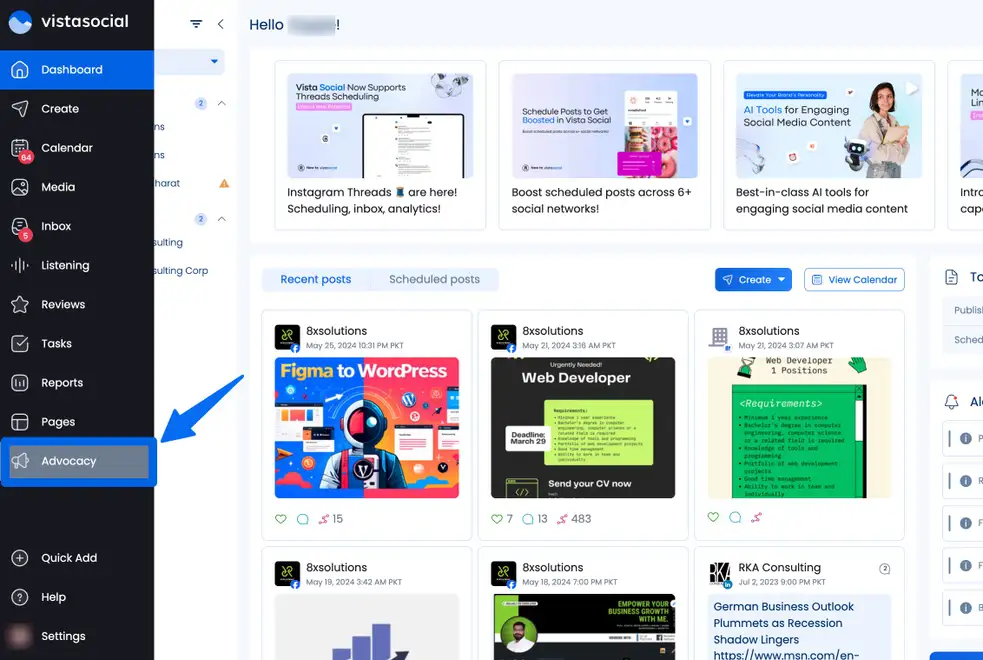
To access the employee advocacy feature, select the “Advocacy” option on your Vista Social dashboard (located on the left-hand side menu).
Click the + Create advocacy option.
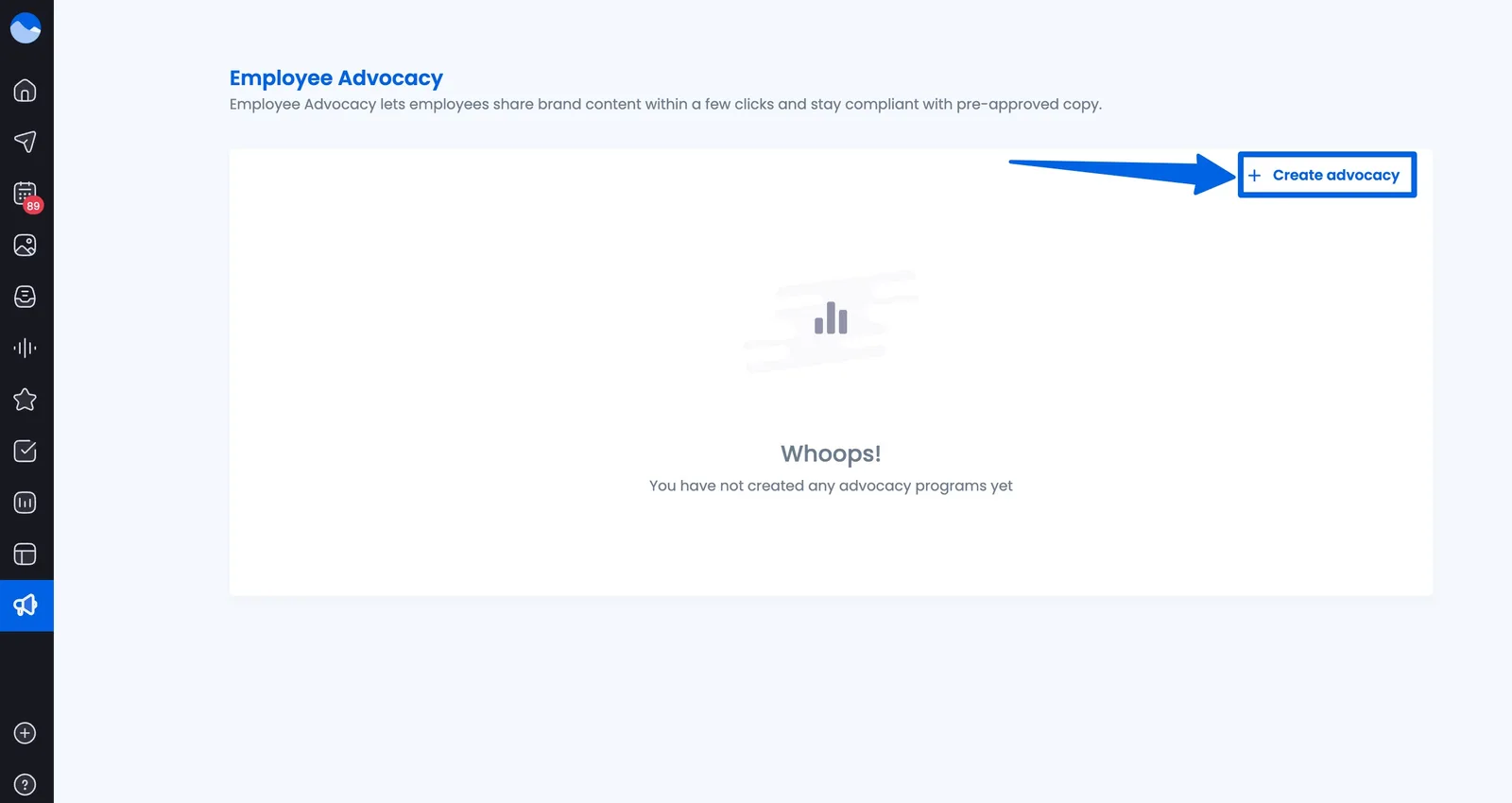
You can create user groups or teams to organize advocates by department, location, or role, perfect for team-based competitions.
Note: You can only create one advocacy for each profile group.
Select the profile group for which you want to create your advocacy and set up the rest, such as Slack or email notifications, email digest schedules, and UTM parameters that are automatically added to any link posts.
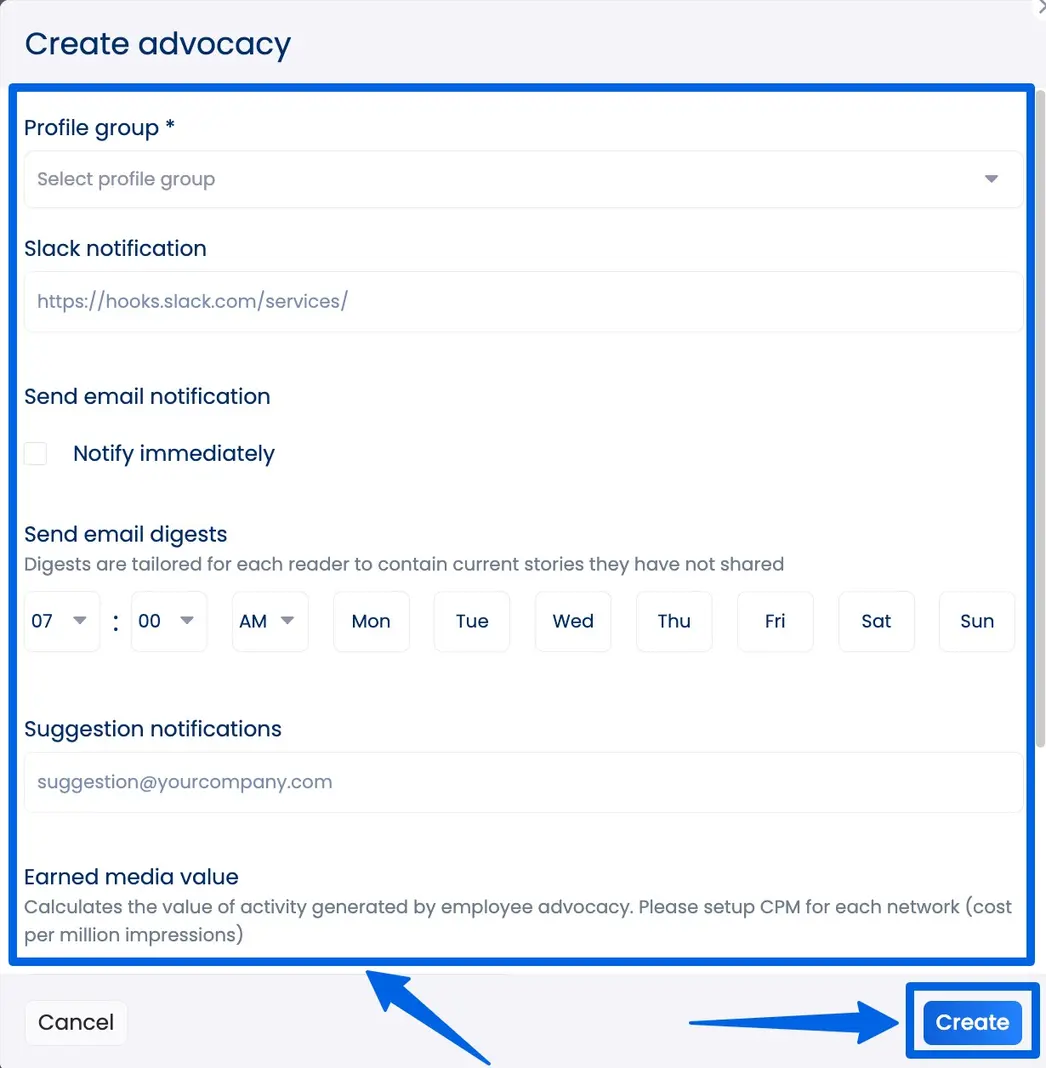
Click the Create button, and your advocacy program is ready to go.
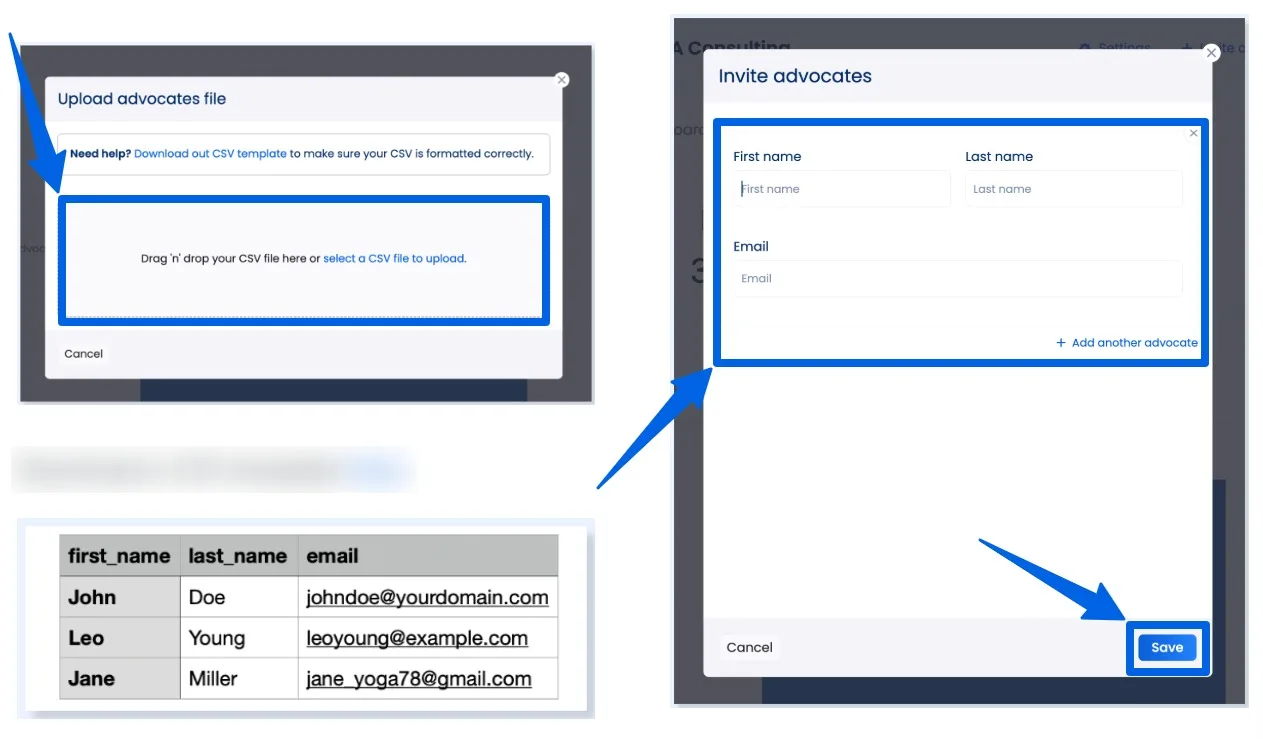
Now that your program is up and running, it’s time to set up your advocacy team by inviting your advocates.
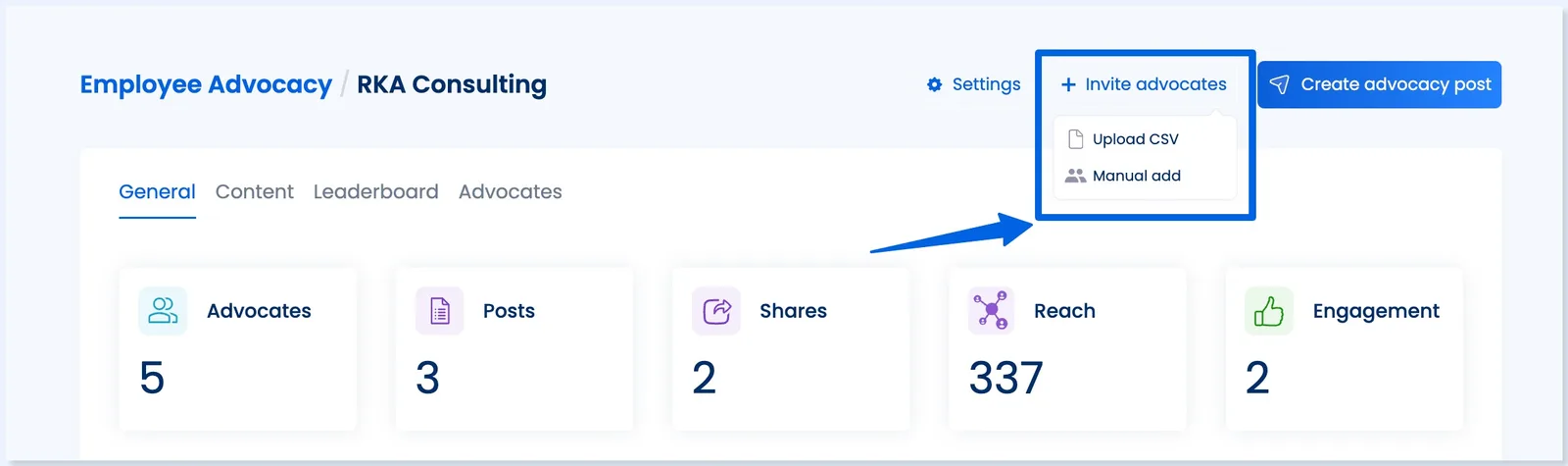
To invite your advocates, you can:
- Create a spreadsheet with a column for your employee advocates’ first names, last names, and email addresses, then export it in Vista Social as a CSV file
- Manually invite individual advocates by entering their names and email addresses in the designated fields
Step 2: Share ready to post advocacy content
To encourage participation, make it easy for your employees to get involved.
The best way to do that is to create pre-approved advocacy content that your employees can easily share.
Vista Social lets you create two types of advocacy content:
- Advocacy content: Content that your admins create and make available for sharing to employees’ personal social media accounts as a new organic post
- Published content: Posts that were already published to your company’s social media accounts, and are available for your employees to interact with, such as sharing, liking, commenting, or resharing
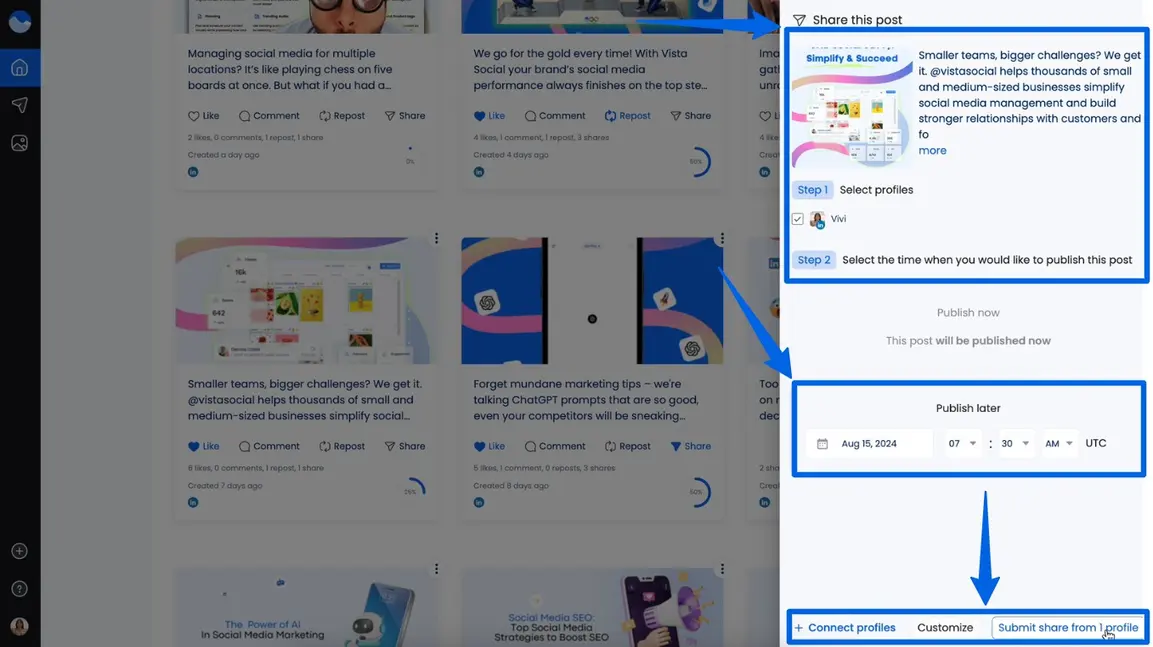
All advocacy-only posts and published content available for sharing are located in the Content section.
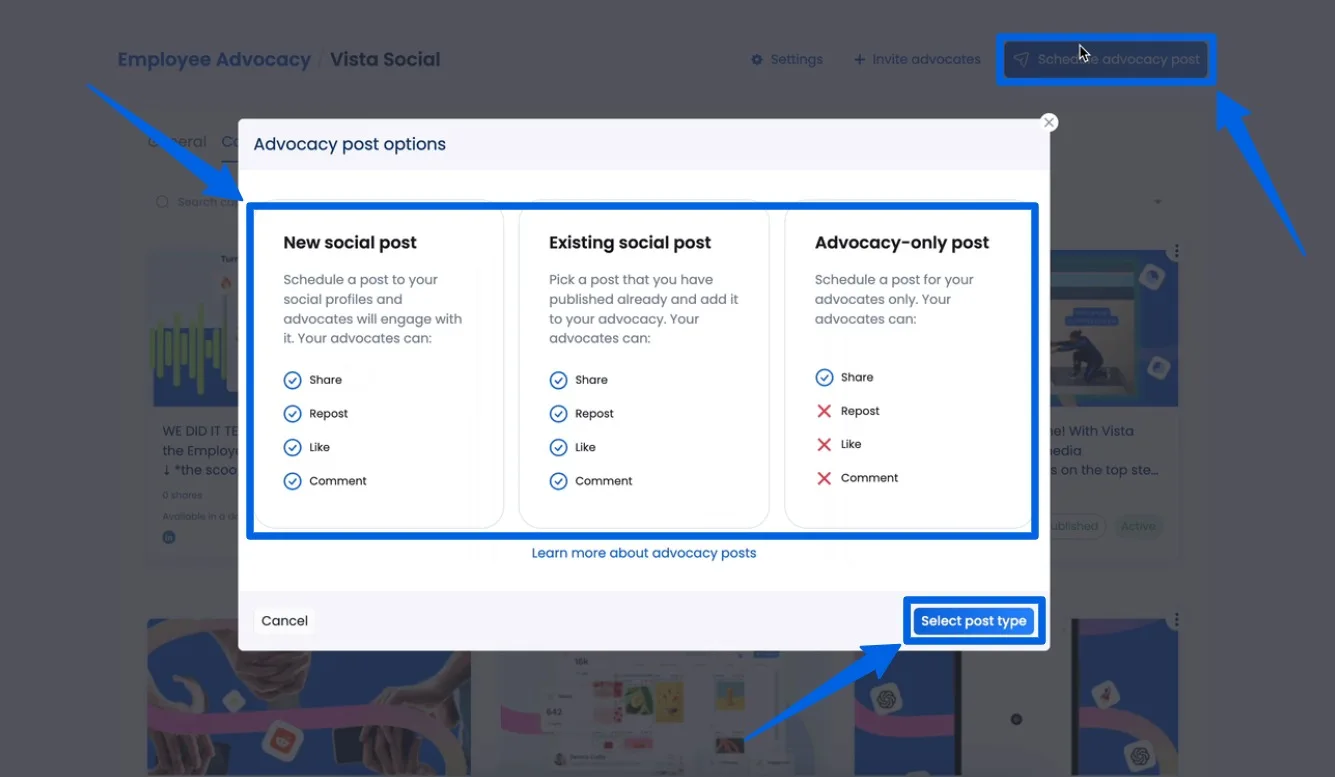
To create your advocacy posts, go back to the Advocacy page, click Schedule advocacy post, and select your advocacy post type.
Create and customize your advocacy post by uploading a video or image, adding captions, including hashtags, emojis, links, etc.
Want to come up with engaging post descriptions or captions fast? Use the AI Assistant (Magic wand icon) to generate these for you instantly.
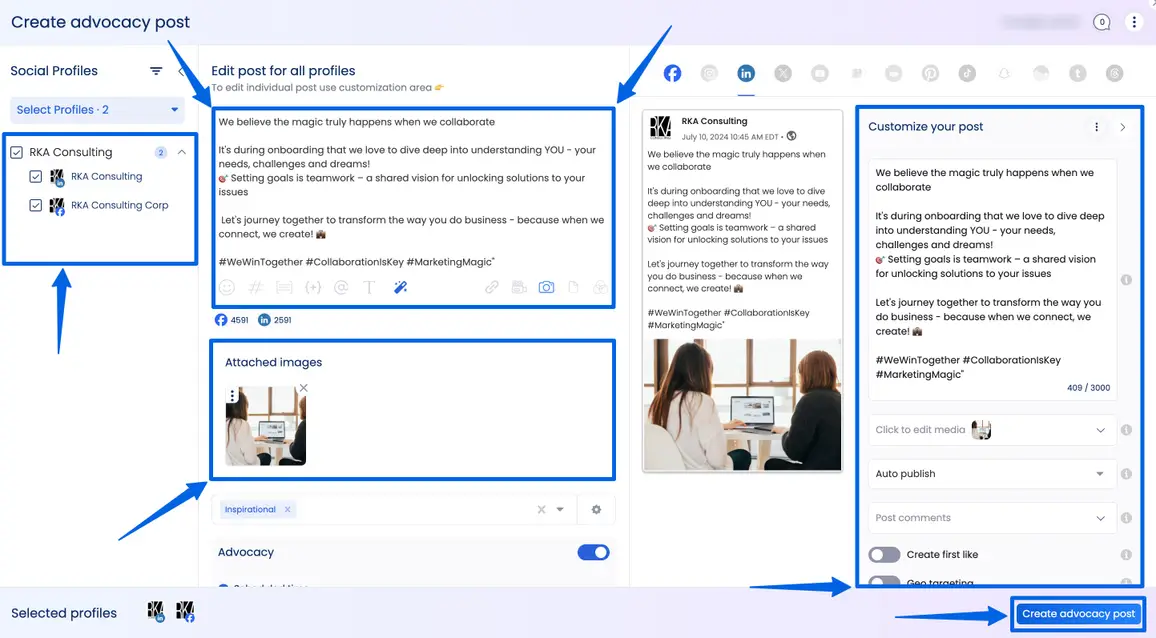
In the Advocacy section at the lower part of your screen, you’ll see the Advocacy toggle button switched on (by default).
You can schedule a time to make your post available to your employee advocates. You can also save it as a draft if the post needs further review or approval from admins.
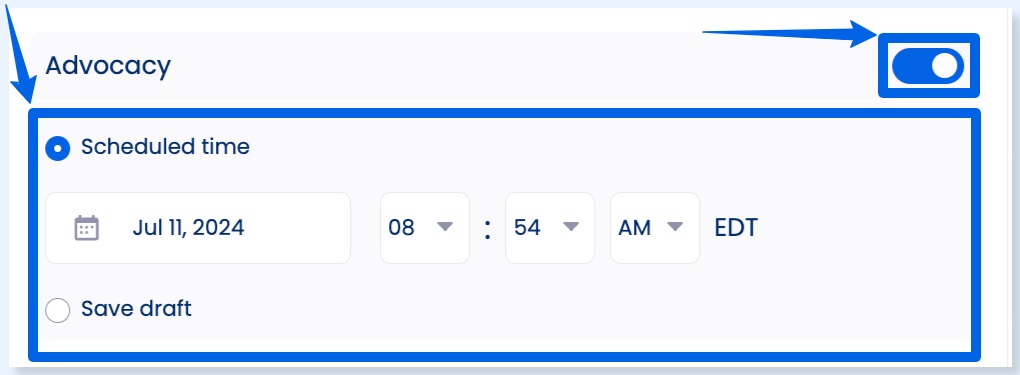
If you’re scheduling a post via the social media publishing feature, you can turn it into an advocacy post by switching on the advocacy toggle switch.
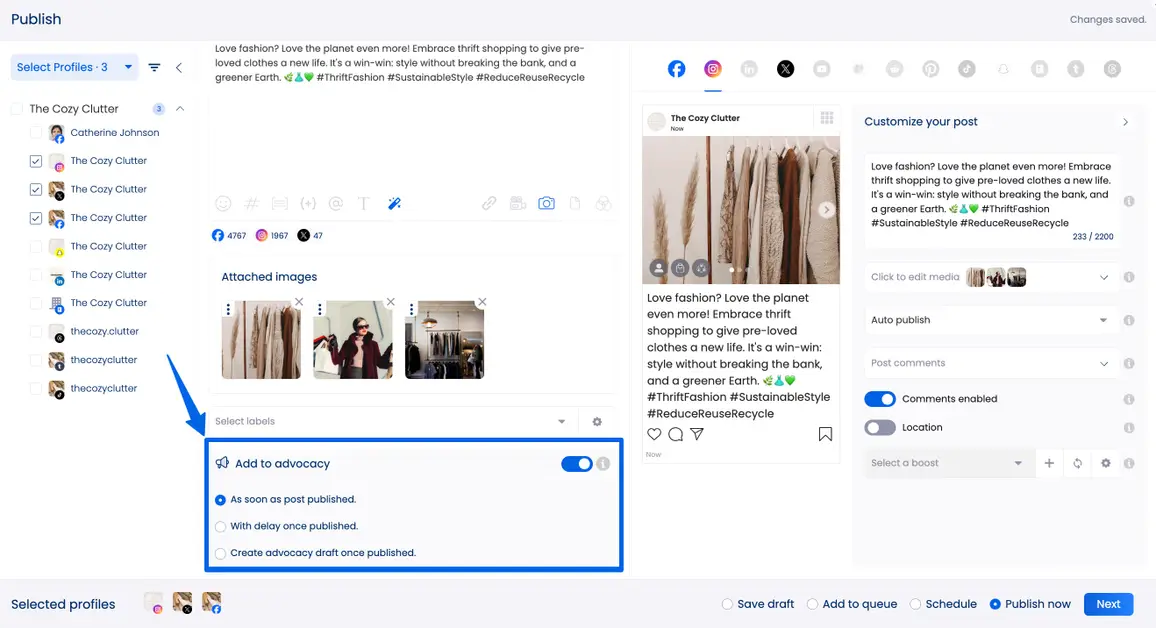
You can set when you want the post to be added to your Advocacy content:
- As soon as the post is published
- With delay once published
- Create advocacy draft once published
Step 3: Introduce friendly competition
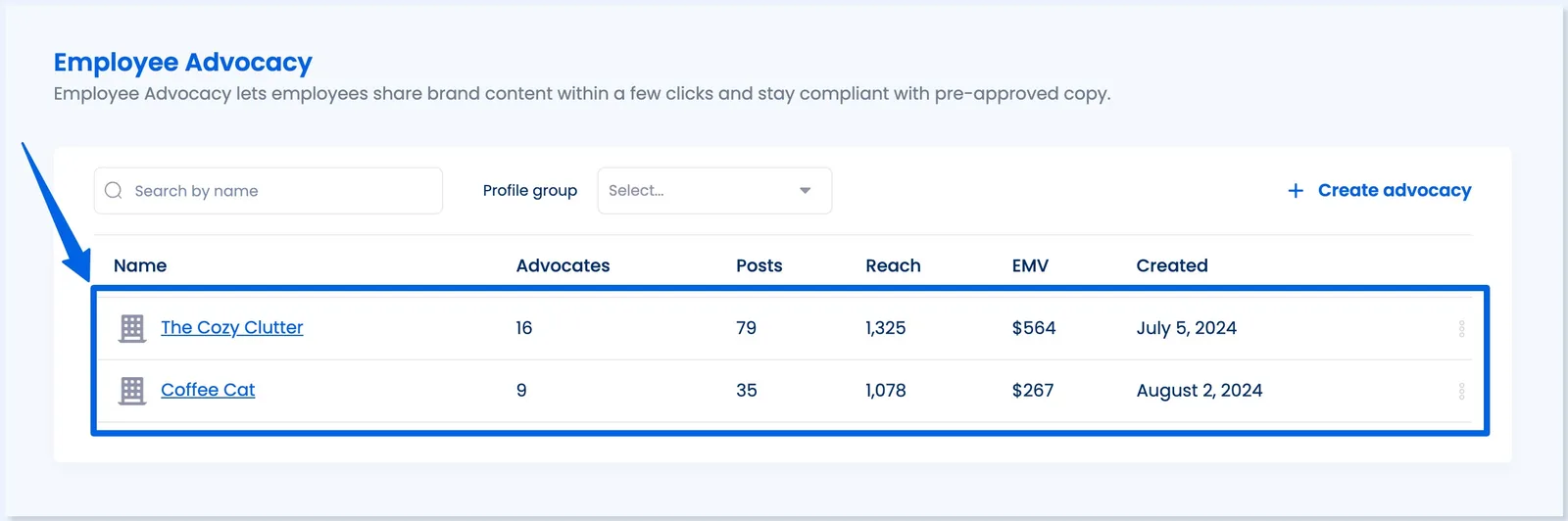
Tracking and rewarding your advocates is quick and easy with Vista Social’s Advocacy Admin dashboard.
Select the specific advocacy program (brand or business) from the list to view its dedicated dashboard.
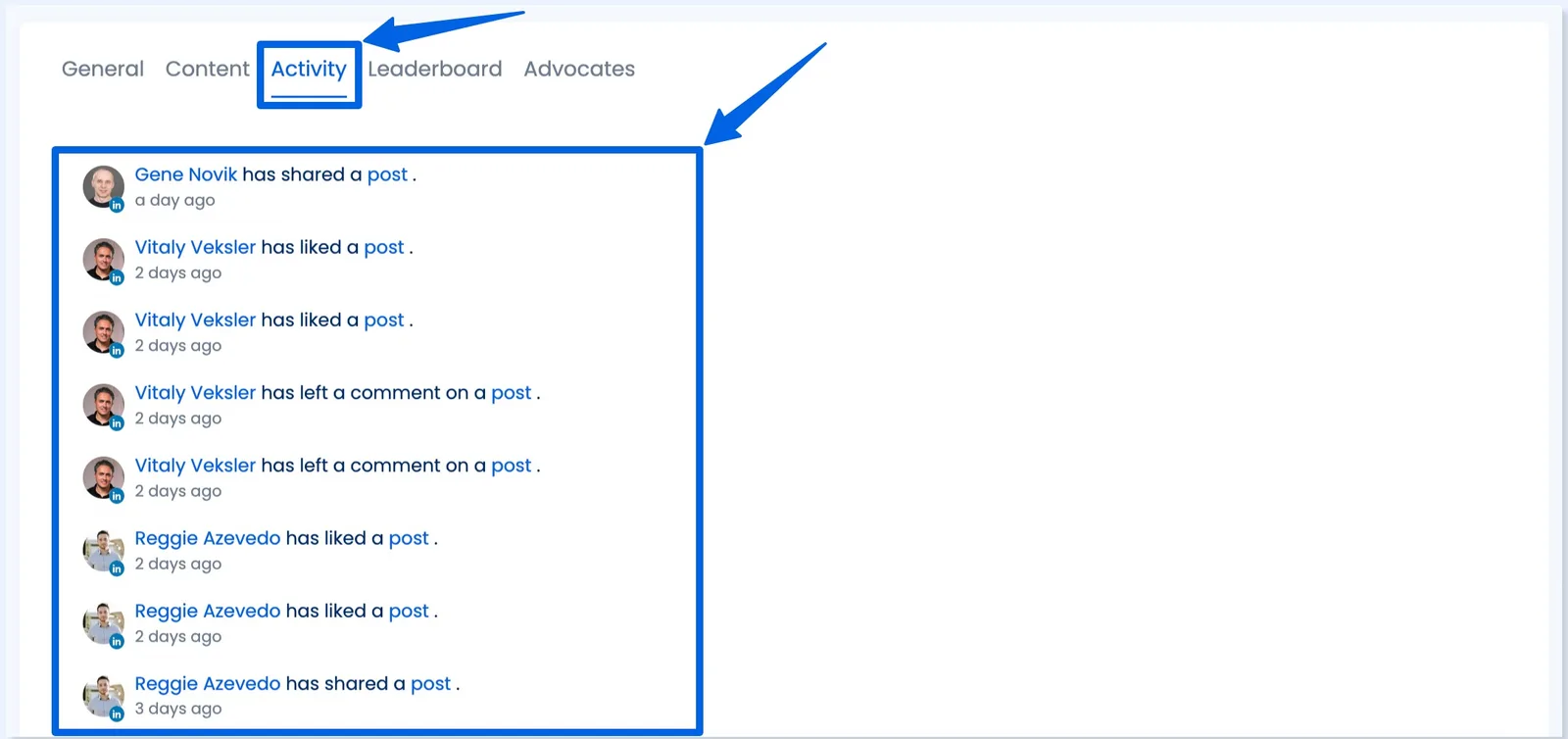
Vista Social automatically tracks shares, clicks, and engagement for each employee’s posts, which you can see in the General section.
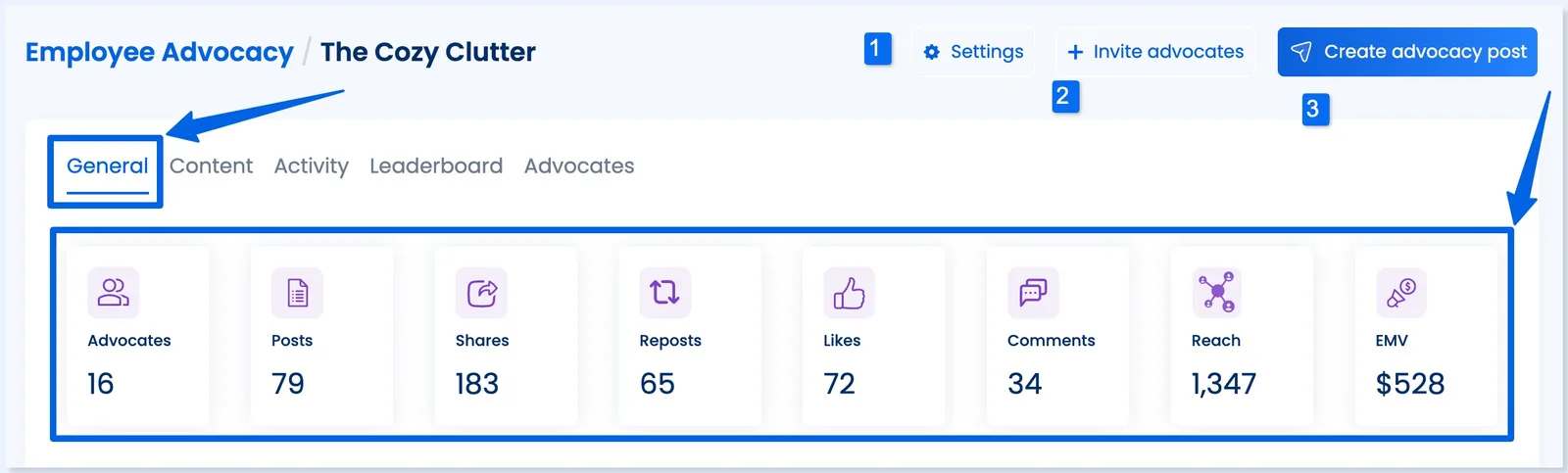
The numbers help you determine the effectiveness and performance of your employee advocates.
To view your advocate’s specific activities, select the Activity section.
The best part?
The dashboard features a Leaderboard that displays your top-performing advocates based on key metrics, including shares, reposts, engagement, and earned media value.
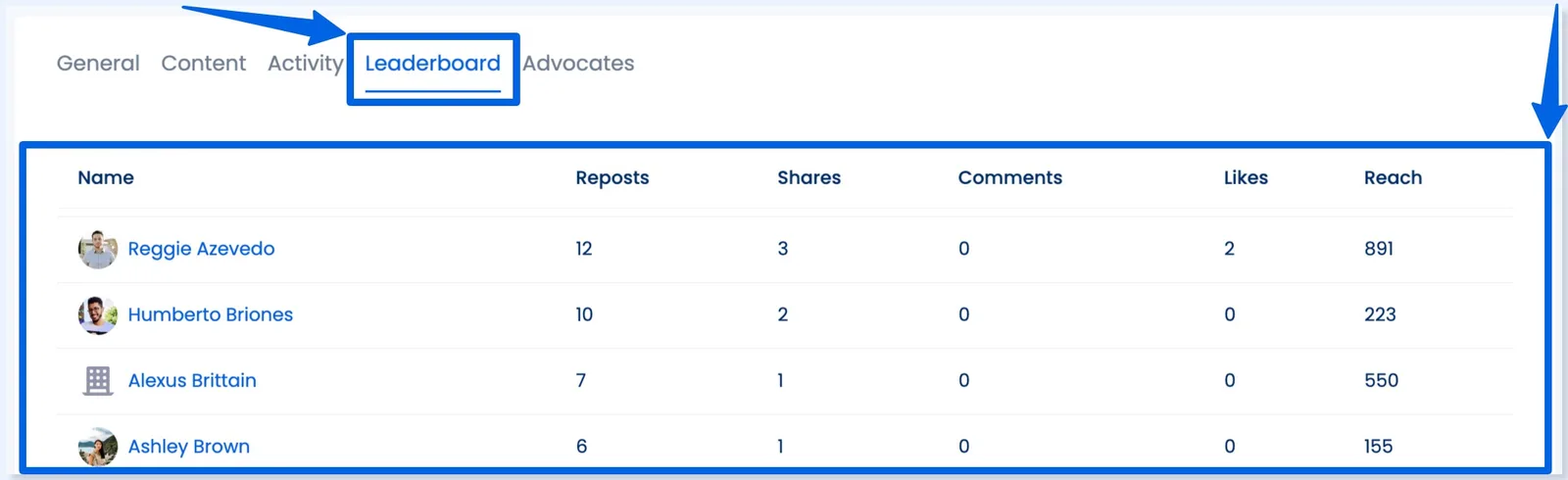
The leaderboard makes it easy to identify your monthly top sharers and advocates with the most engagement, which is crucial when gamifying employee advocacy.
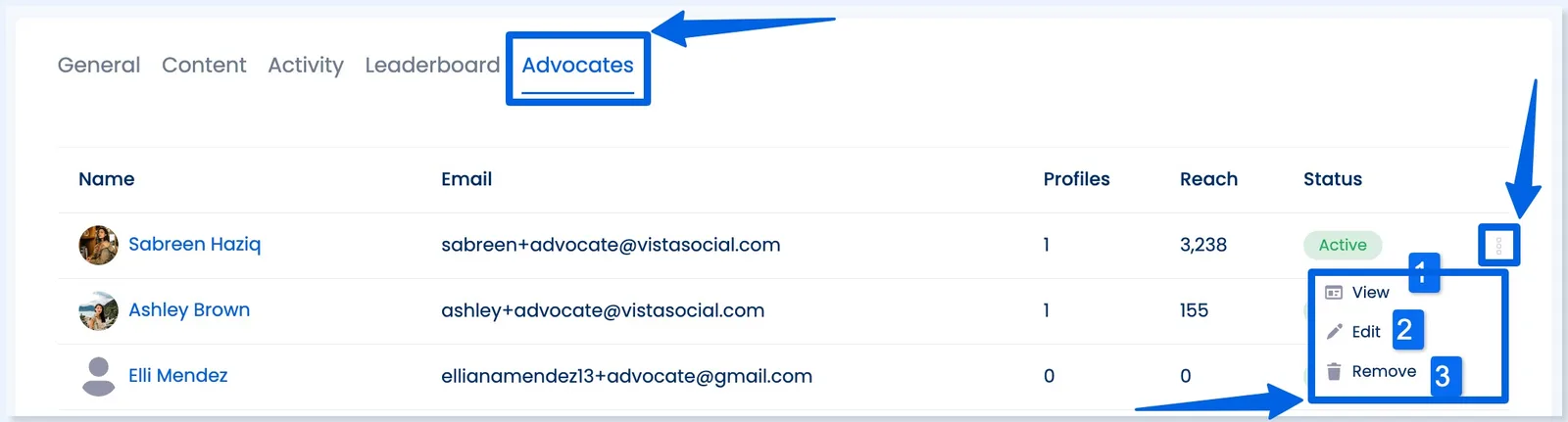
You can also see a complete list of all your advocates and manage them in the Advocates section.
Step 4: Create incentives and recognition
With Vista Social’s advocacy leaderboard, you can easily gamify your employee advocacy program and recognize and reward top advocates by:
- Running monthly or quarterly contests and providing incentives to the Top Advocates of the Month
- Offering small prizes or public shoutouts in team meetings, Slack channels, or internal newsletters
- Celebrating not just quantity, but quality by recognizing high-performing posts that genuinely connect with audiences
Step 5: Analyze and improve
After a few rounds of gamified advocacy, use Vista Social’s reporting features to assess the impact of your program.
The platform’s tools can help you:
- Track engagement growth, reach, and click-throughs from employee-shared content
- Identify your top-performing posts and top advocates to refine your strategy
- Share insights with leadership to demonstrate how advocacy supports your overall social media marketing strategy objectives
- Uncover insights to refine your employee advocacy guidelines
Common pitfalls to avoid when you gamify your employee advocacy
Watch out for the common missteps below that can trip up even your most well-intentioned employee advocacy efforts.
Only rewarding quantity and not quality
Rewarding employees purely based on how often they share can quickly lead to low-effort or spammy behavior, such as generic reposts, uncaptioned shares, or posts that lack genuine value.
It can weaken your brand message, but it can also erode the trust and credibility of your employees’ networks, especially when your brand is undergoing a PR crisis.
Instead of pushing for volume, prioritize high-quality contributions.
Give more weight to thoughtful engagement, such as writing original captions, customizing content, or generating real interaction (clicks, comments, or conversations).
When you reward smart sharing, not just frequent sharing, you encourage employees to view advocacy as a strategic extension of their voice, rather than just a task to check off.
Making it too competitive
A bit of healthy competition can drive participation.
However, making your program feel like a cutthroat contest can turn people off, especially if the same top performers dominate the leaderboard every month.
It can discourage your newer or less connected employees from trying at all.
To keep things fair and fun, consider rotating winners, resetting scores regularly, or grouping participants by team or region.
This way, everyone gets a chance to feel successful and stay engaged, without the pressure of chasing unreachable ranks.
Forgetting to align with your business goals
Whether you are a B2C or B2B brand, if your employee advocacy program rewards actions that don’t actually support your marketing or brand goals, it becomes a distraction instead of a driver.
Before rolling out your points system, ensure you’re clear on what success looks like, whether it’s expanding reach, generating leads, or increasing website traffic.
Then tie your gamified actions directly to those outcomes.
For example, prioritize points for content that aligns with your campaigns or shares on platforms where your target audience is active.
This way, your gamified advocacy program helps your business win too.
Gamify your employee advocacy and watch your engagement soar
Gamifying your employee advocacy program can effectively energize your team and amplify your brand’s reach.
Whether through leaderboards, points systems, and other gamification and rewards, adding a little friendly competition can turn your employee advocacy into something your team actually wants to participate in.
Just remember: keep it fun, fair, and focused on meaningful engagement and not just vanity metrics.
Ready to streamline running your gamified advocacy program?
Vista Social makes it easy with its intuitive tools, automation, and built-in social analytics.
Create your Vista Social account today and see how simple (and fun) it can be to turn your team into your biggest brand champions.
Employee advocacy gamification FAQs
How do you know if gamifying your employee advocacy is working?
You need to track and measure key factors such as:
- Engagement metrics such as shares, clicks, conversions, and reach
- ROI signals to help you analyze traffic, earned media value, pipeline influence, and cost savings compared to your paid campaigns
- Participation stats to see what percentage of your employees engage or how frequently, helping you understand adoption and identify champions
Why should you gamify employee advocacy instead of just asking employees to share content?
Because gamification taps into the psychology of motivation, making sharing feel rewarding, fun, and communal.
Gamifying your employee advocacy helps improve participation, engagement, and recognition, while fostering a sense of team spirit.
How do you align employee advocacy gamification with your business goals?
Effective strategies include matching points and incentives to the advocacy actions that matter most, such as authentic sharing, engagement quality, or referral clicks, and not just the volume of posts.
It helps keep the game meaningful and aligned with your broader social media marketing objectives.
Try Vista Social for free
A social media management platform that actually helps you grow with easy-to-use content planning, scheduling, engagement and analytics tools.
Get Started NowAbout the Author

Content Writer
Jimmy Rodela is a social media and content marketing consultant with over 9 years of experience, with work appearing on sites such as Business.com, Yahoo, SEMRush, and SearchEnginePeople. He specializes in social media, content marketing, SaaS, small business strategy, marketing automation, and content development.
Loading related tools...



Tools
PublishingAnalyticsEngagementIntegrations
FacebookInstagramLinkedInRedditSnapchatThreadsTikTokX (Twitter)YouTubeBlueskyVista Page (link-in-bio)All IntegrationsCopyright © 2026 Vista Social LLC. All Rights Reserved.